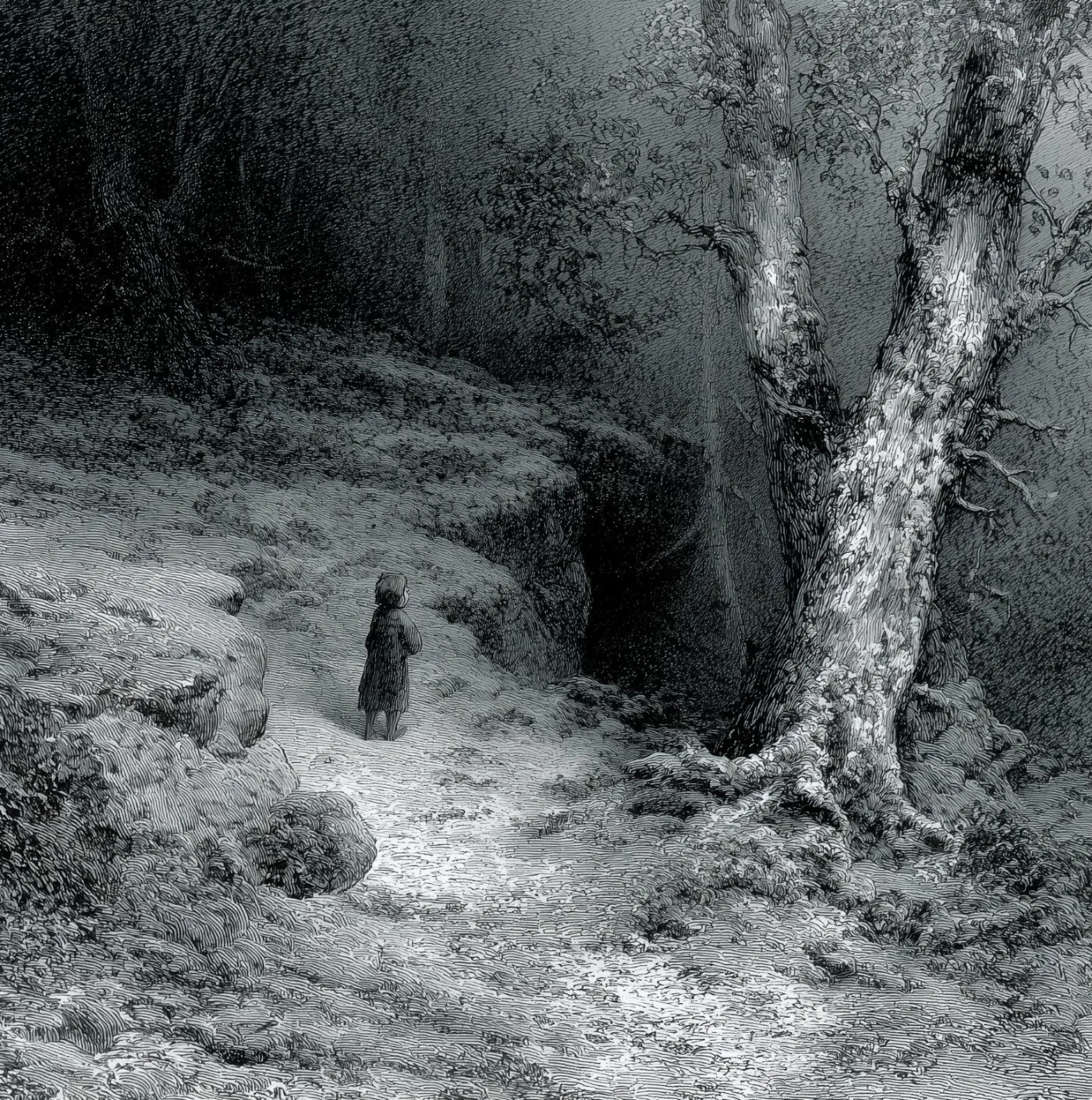
Before there was a studio, there was a young man who loved the living world, and a notebook on his knees.
La Chance de Côme follows a young designer through the industrial ages of Calces. It begins in a village, in a primary state of wonder, with Côme as an observer in love with the living. From there the tale carries him through the workshop, the city of iron and the crossing of the sea, across the very revolutions that shaped the modern world, and asks what design might become if it remembered what that world had forgotten.
The blue insect
01 · The founding tale
The Village
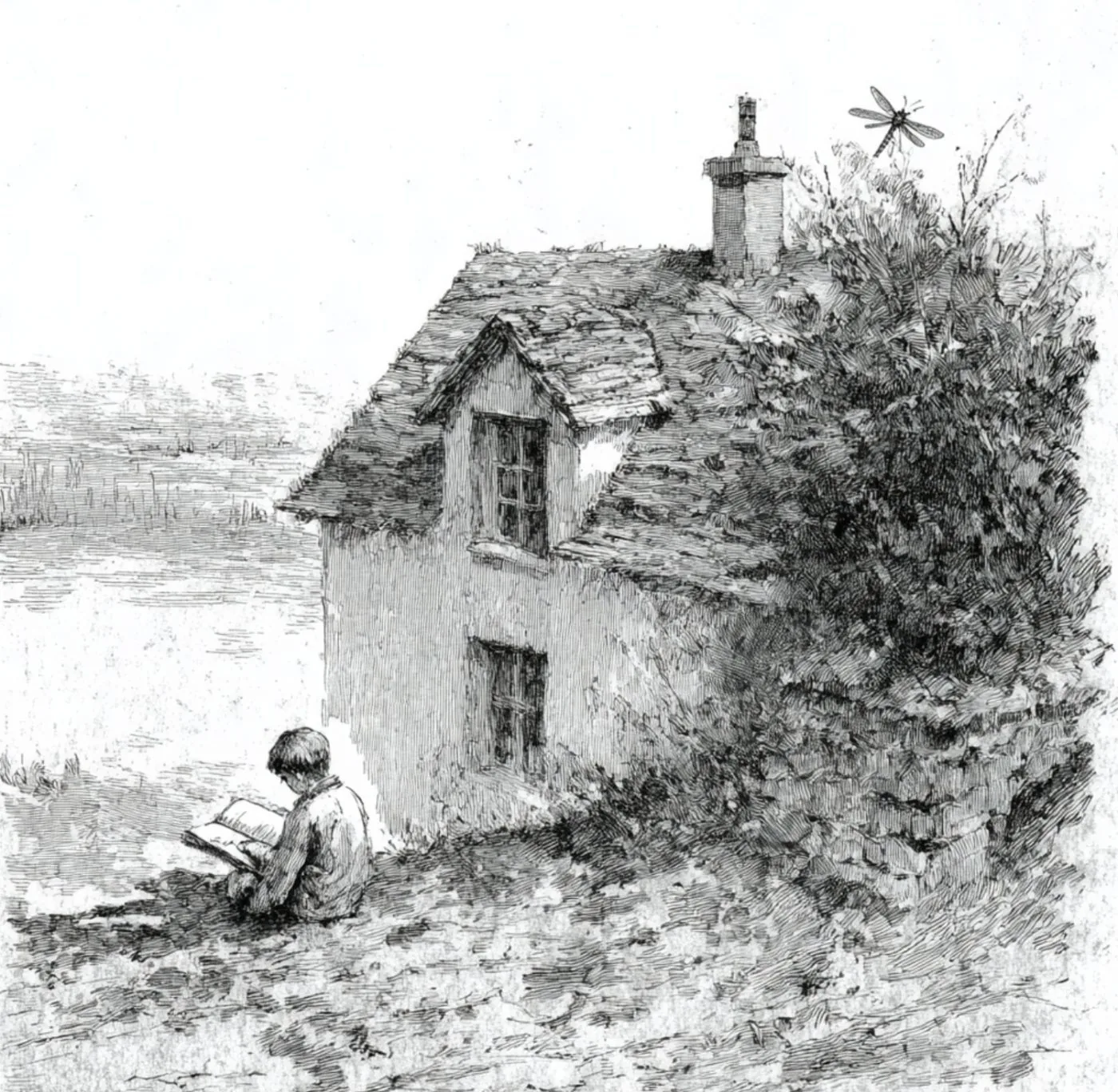
The tale opens in a state of wonder. Côme is a child of the living world, an observer who reads the river and the light before he reads anything else. Into this world his father brings the village artisan, a man with a curly beard and an imposing belly, and with him the first idea that making is a way of belonging.
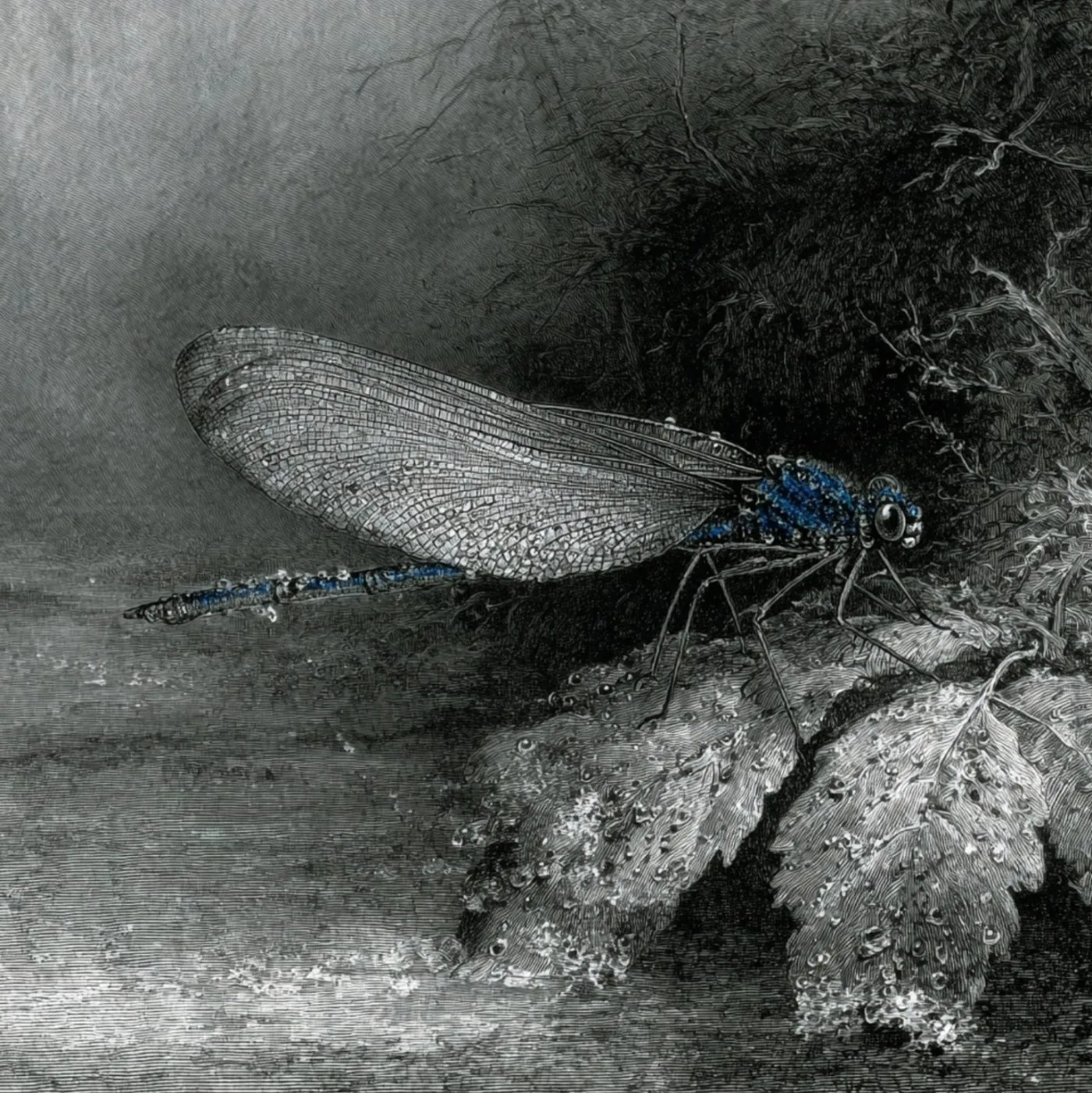
A blue insect on a twig that crossed the current looked like a musical note drying its wings in the sun.
« Un insecte bleu avait l’allure d’une note de musique séchant ses ailes au soleil. »
02
The Workshop
In the workshop, Côme meets the first law of the ordered world. Each must follow his role and the tasks it carries. The freedom of the village gives way to function, to hierarchy, to the quiet pressure of a place where every gesture has already been assigned its purpose.
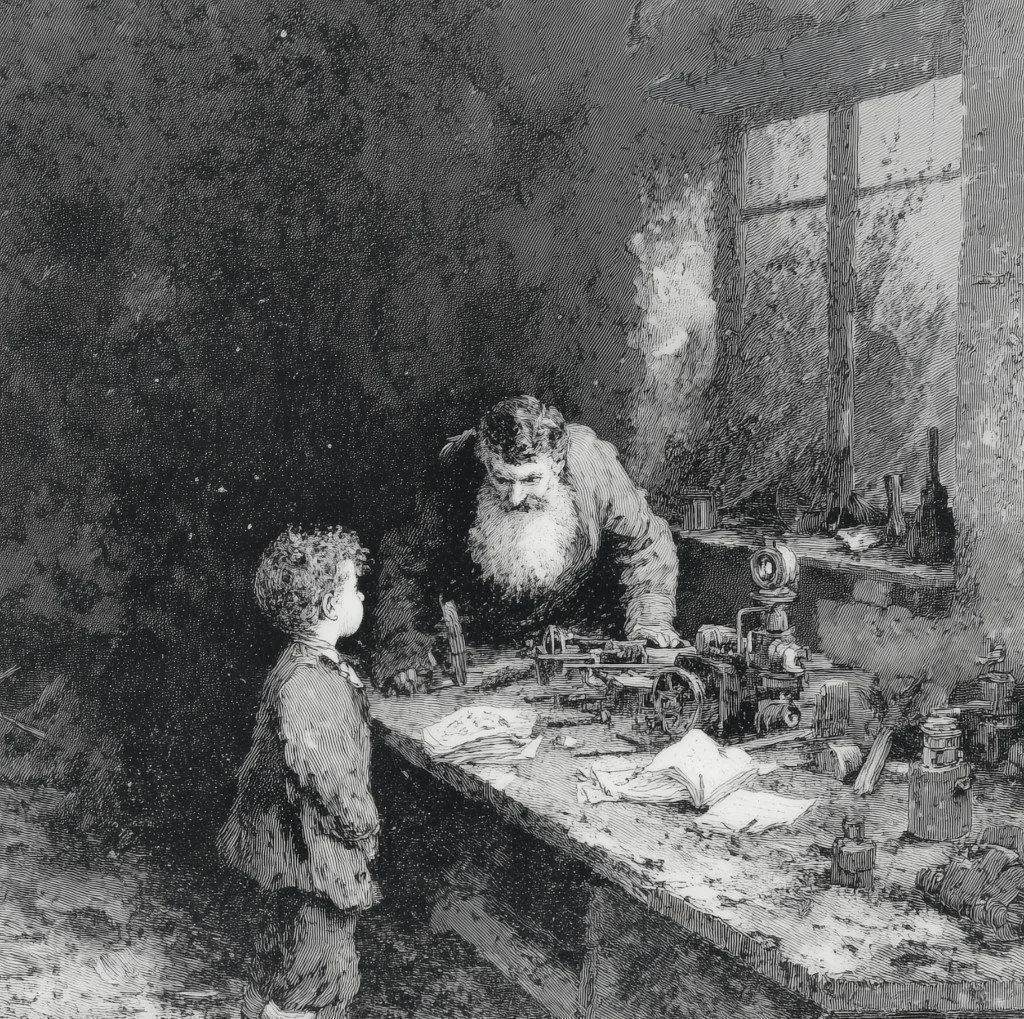
The workshop · the first law of the ordered world
03
The Departure
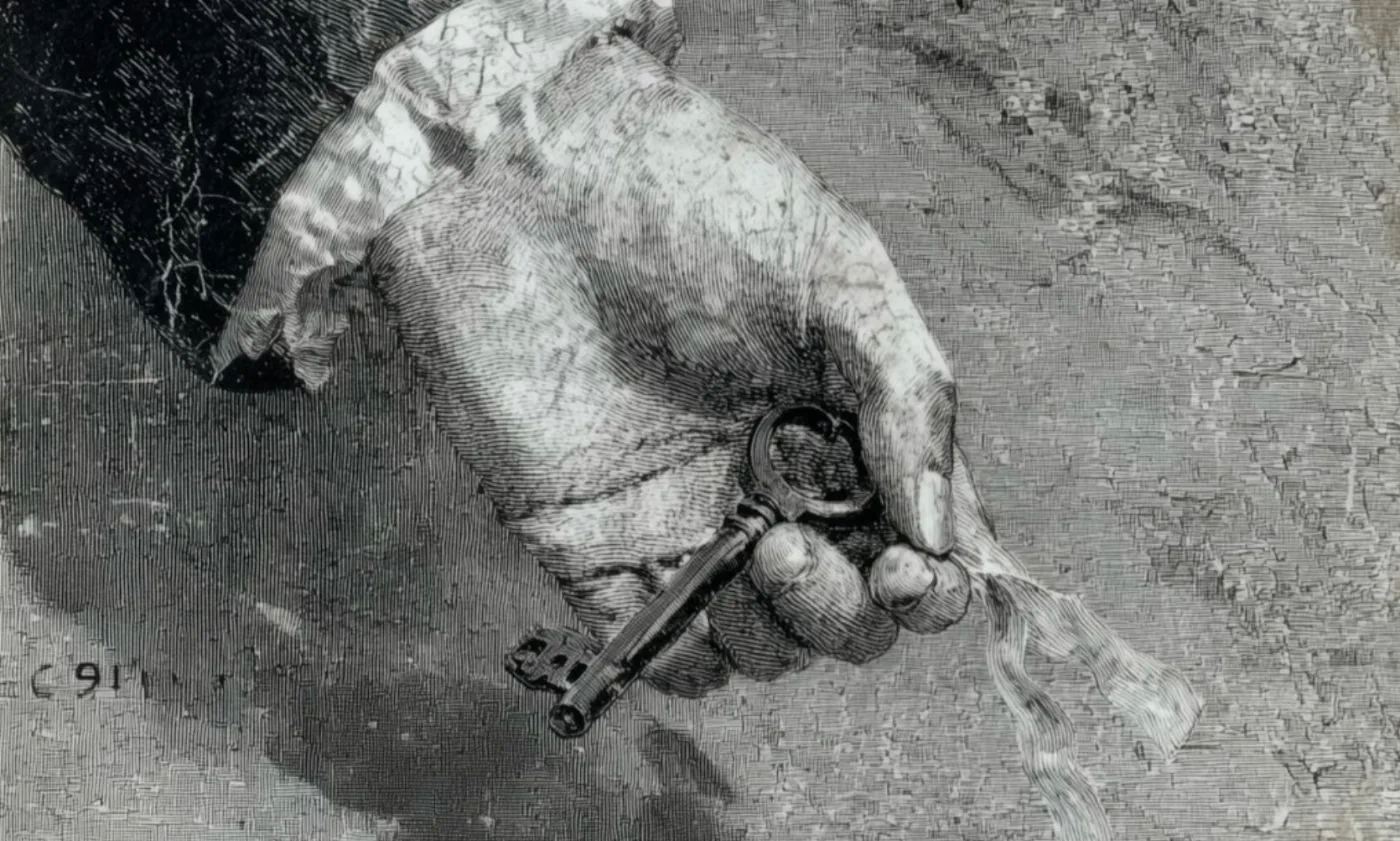
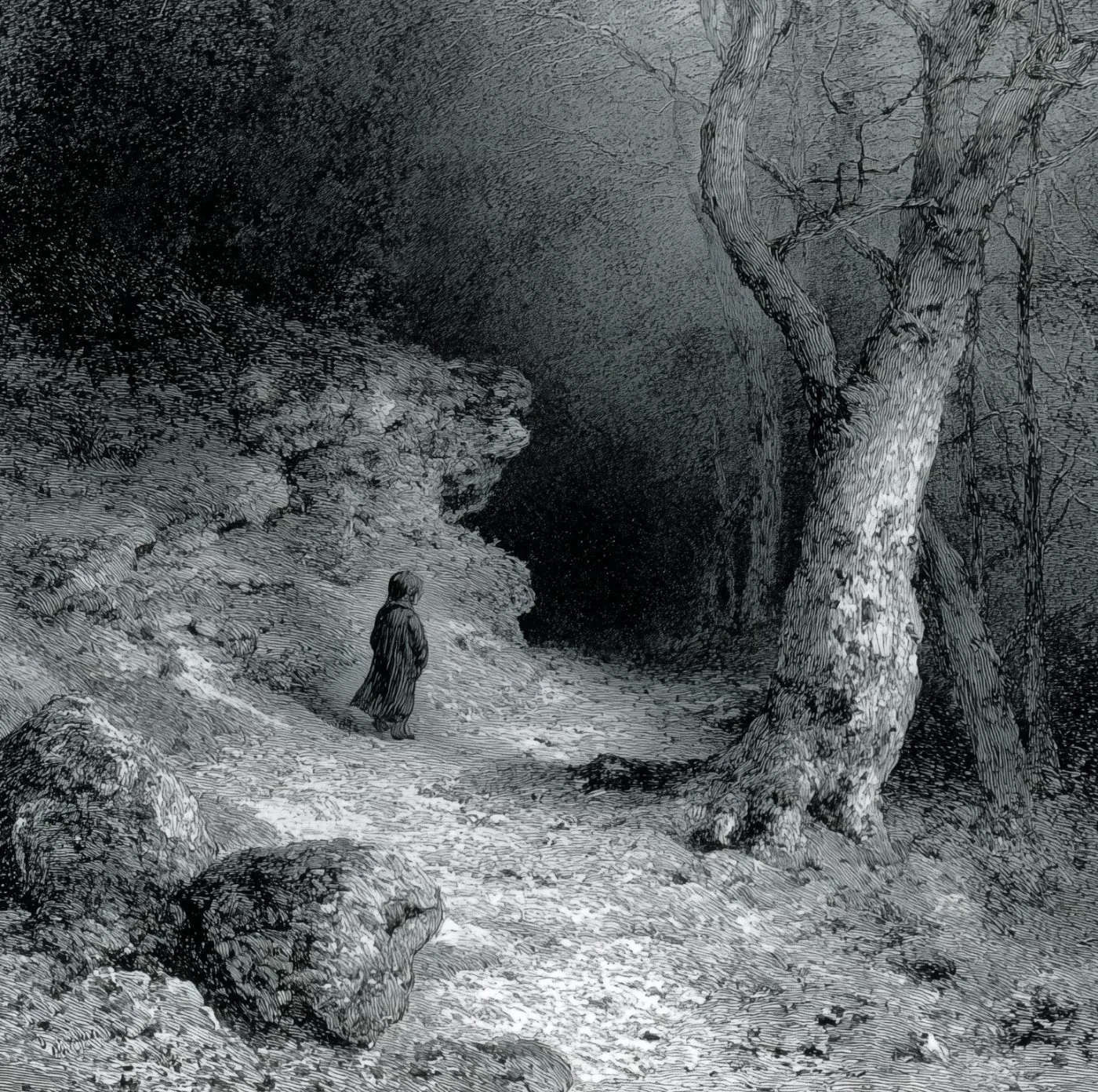
A keyring of metal grants him a single day of freedom. Côme slams the heavy door behind him and savours the walk, gripping the keys that open the way out. Beyond the threshold the landscape has already changed: the blocks are built of black brick, now covered in a thick soot, also black.
The forest
04
The City
In the city, the world has hardened into a single mass. The director wears the look of a man feigning interest. Everything tends toward the same uniform grey. Here the tale reaches the heart of its diagnosis: a civilization that has mistaken domination for progress, and forgotten the living it was built upon.
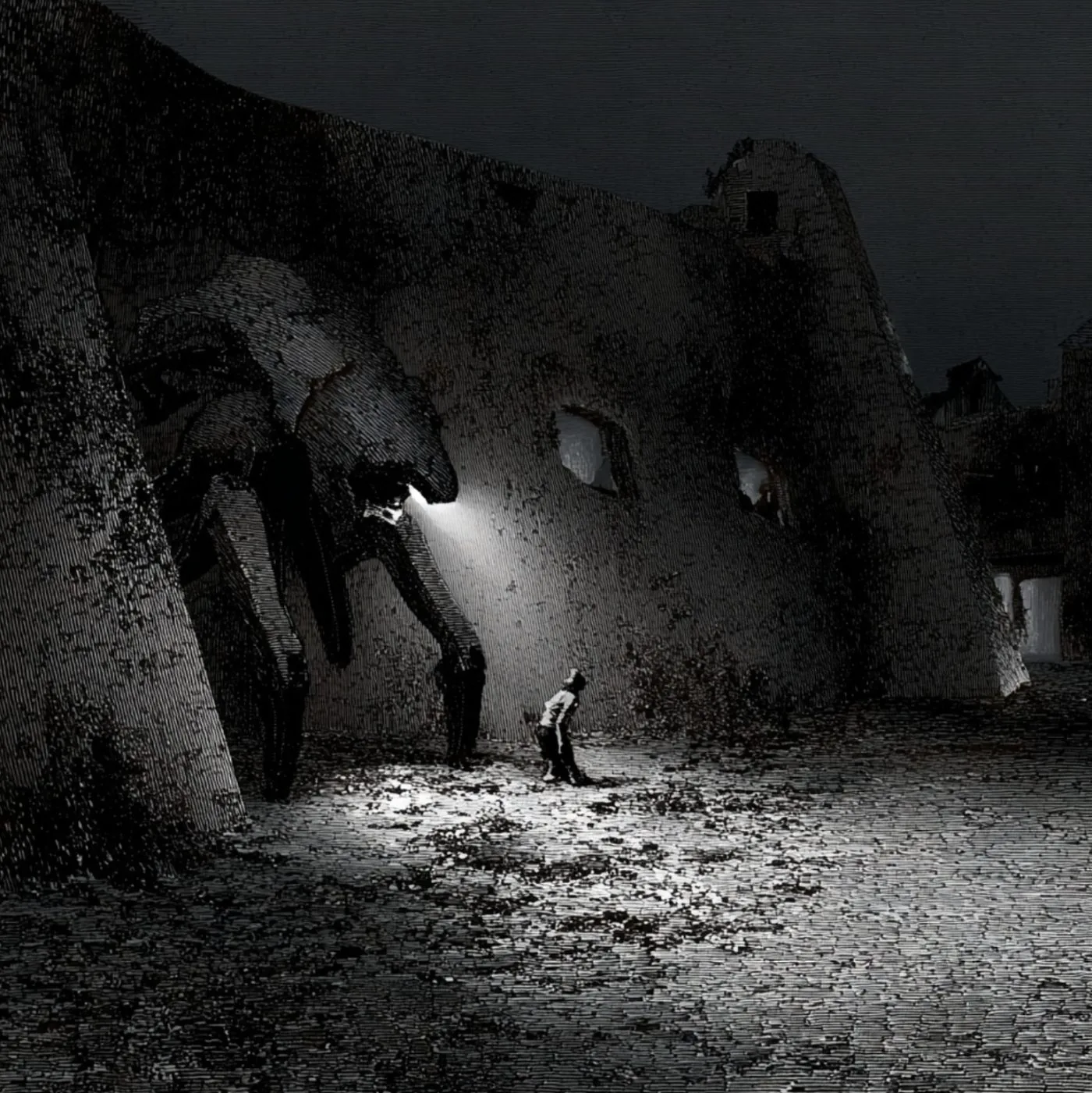
The city of iron
Everything in the city tended toward the same uniform mass, like a single cry of iron.
« Tout dans la cité tendait à la même masse uniforme, comme un seul cri de fer. »
05
The Crossing
Côme takes to the sea, skirting a chain of sharp rocks, and reaches an island where calm reigns and the water slides over the sand in a gentle melody. Yet even here the new age has left its mark: strange machines roam the sky, drawing the energy of the clouds into a globe carried in their lower bodies.
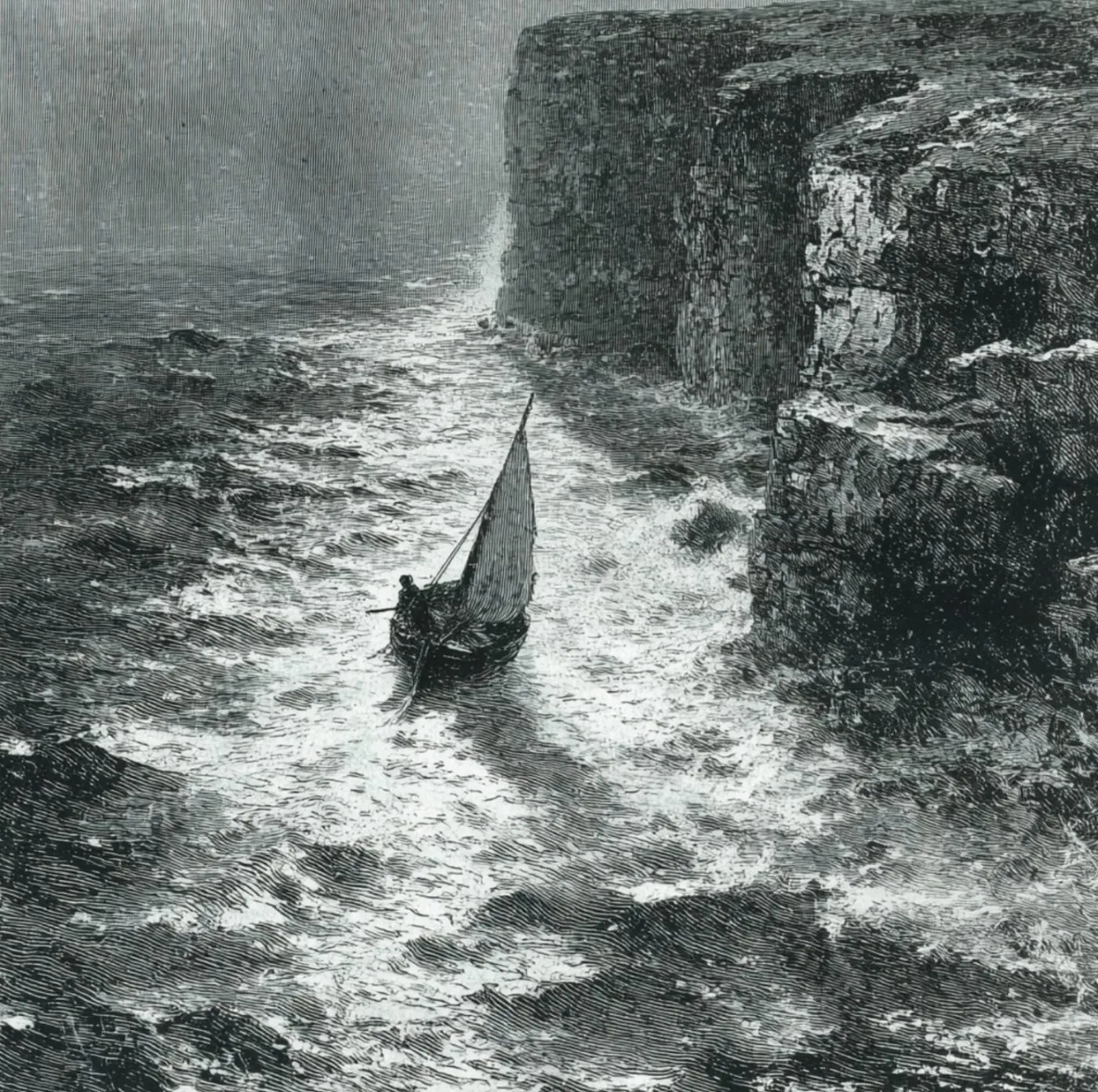
The crossing
06
The Return
Côme returns, but he is not the one who left. He has crossed the ages of gears and soot, and seen both what the modern world builds and what it costs. The next morning his parents find him on the sunlit doorstep, notebook on his knees, calm and focused. Côme is drawing. He does not yet have the words for what he has understood. But Côme, for his part, knew.
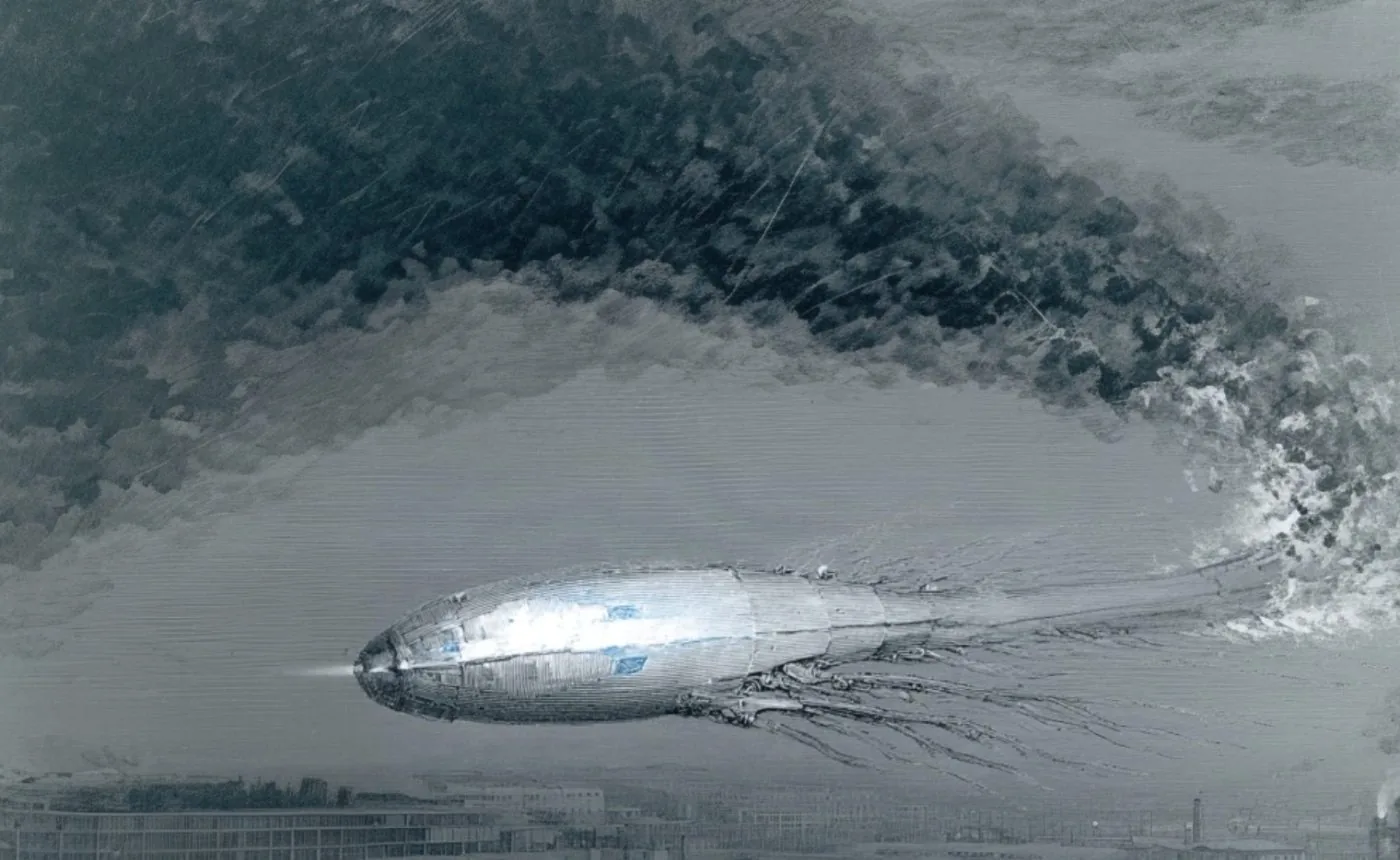
The return · notebook on the doorstep
Notebook on his knees, calm and focused, Côme was drawing.
« Son carnet sur les genoux, calme, concentré, Côme dessinait. »
Author’s note
The chance of the studio
La Chance de Côme is the founding text of Studio Oneiro, a thesis written at École Camondo in 2021: the initiatic tale of a young designer crossing the industrial revolutions of Calces. It was conceived as a story about design itself, about what a designer is for in a world that has learned to dominate the living rather than belong to it.
Four years before Oneiro existed as a studio, this tale already carried its question. The chance of Côme is the chance of the studio now: the wager that design can be a craft of relationship rather than control, and that to imagine differently is the first step toward living differently.
To meet design is to meet oneself.
Soutenance · École Camondo · MMXXI — « Quand on va à la rencontre du design, on va à la rencontre de soi-même. »
One must not seek to escape our worlds, but to collaborate with them.
« Il ne faut pas vouloir s’extirper de nos mondes, mais bien collaborer avec eux. »